
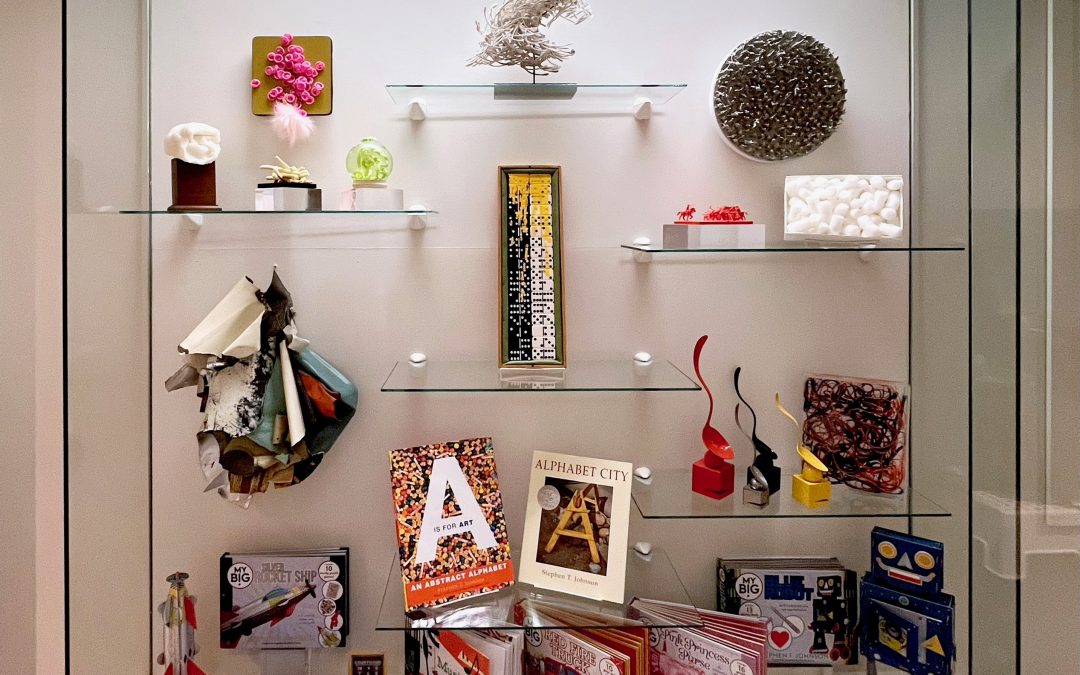
1A/ How are word elements important for creating art and for cultivating our imaginations?
Stephen/ If I may use my series called Literal Abstractions as an example, for over two decades, I have selectively chosen particular words from various letters of the alphabet, then arranged them in an alliterative sentence that leads to a visual work of art based solely on the meaning of these words.
For example, a recent Literal Abstraction using words with the letter C is titled Content Versus Context, made with plastic toy soldiers, enamel paint, and a plastic base that can turn clockwise or counterclockwise. The related text reads: “Clashing combatants, comprised of contradictory conflicts spanning centuries, continents, and countries, are configured within a constrictive, circular composition, to challenge common conjectures, correlations, and cultural conventions concerning contemporary art.â€
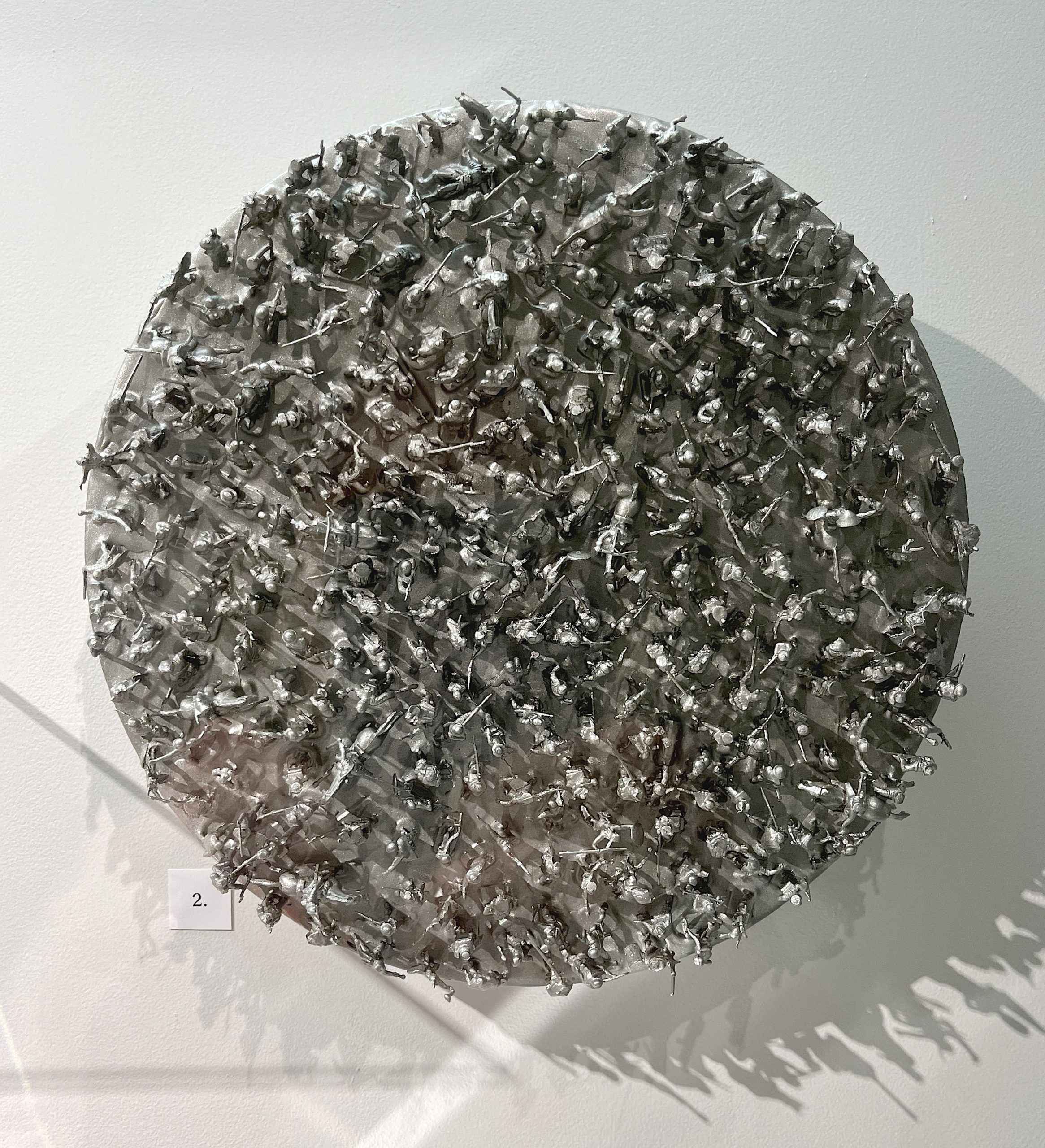
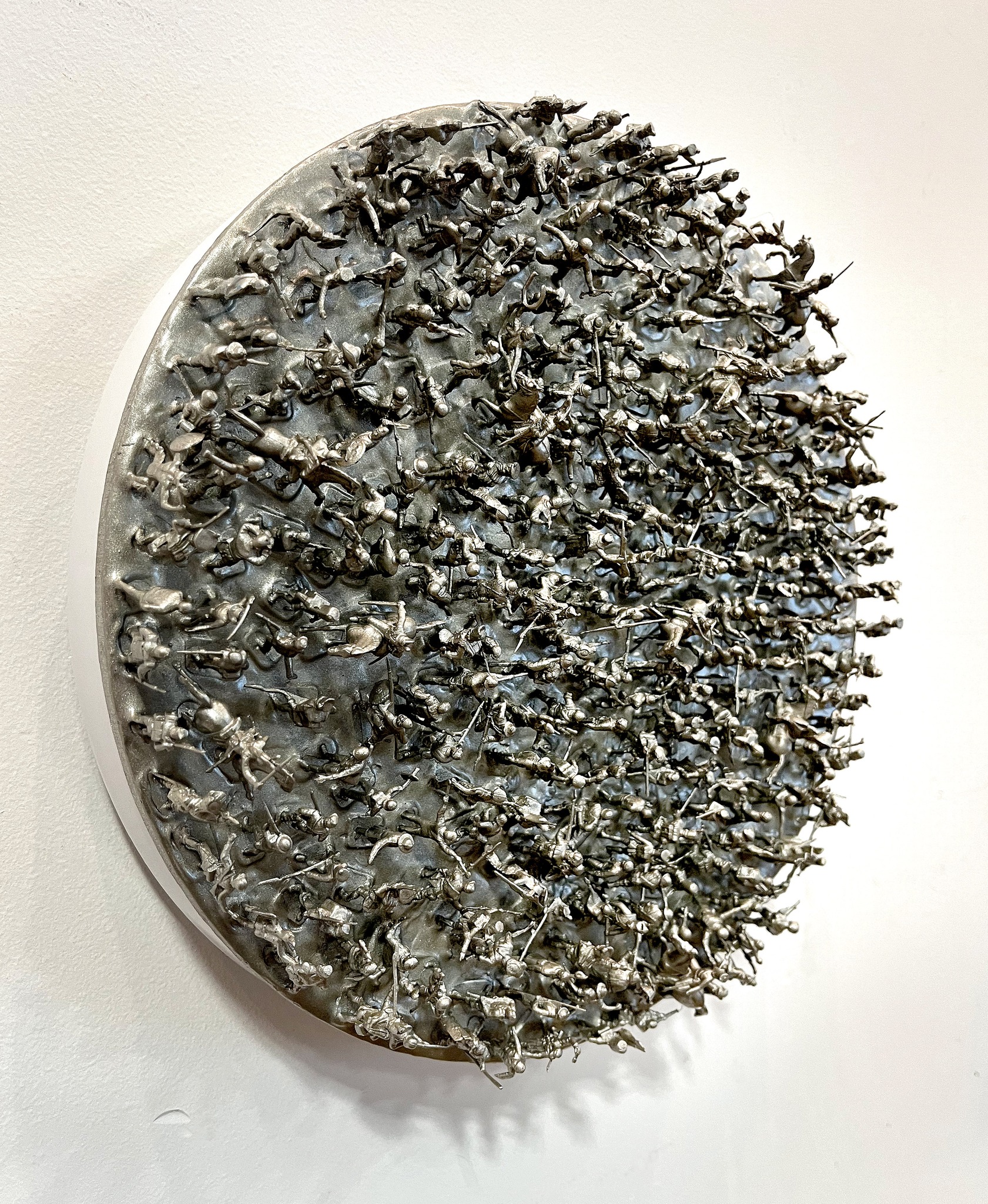
My hope is that these works ignite and inspire dialogues about art, words, and ideas which might quicken the imagination of audiences of all ages, to generate creative associations and explore new ways of pulling abstractions out of the real.
1B/ Do we maybe think in words and language?
Stephen/ Absolutely. I particularly like to play with word associations in my mind and do so both in French and English. We also currently live in the most visually abundant time due in large part to social media – Facebook, Instagram, TikTok, etc., therefore we no doubt think in a visual language as well though perhaps not always conscious of doing so.
2/ What can we expect to see by visiting the Art of the Imagination exhibit currently at the Toy & Miniature Museum in Kansas City?
Stephen/ A selection of my children’s books and new “Literal Abstractions†created specifically for this venue.
Editor’s Note: Stephen T. Johnson’s artwork is featured in The Art of Imagination case through December 31st, 2024. In this display at The National Museum of Toys/Miniatures located at 5235 Oak Street, in KCMO, 64112, Stephen illustrates concepts in his three children’s alphabet books: 1) A is for Art: An Abstract Alphabet; 2) Alphabet School; and 3) Alphabet City; and the artist further expands on some of these artistic elements.
Johnson’s work invites the viewer to reconsider ordinary objects as extraordinary opportunities for adventure.
~ from The National Museum of Toys/Miniatures website at <https://toyandminiaturemuseum.org>
3/ Artwork always seems to relate imagination, community, and people in an intelligent expression. Is that beauty?
Stephen/ Always a tough question to answer of what constitutes or defines beauty. Artists many not always be interested in community or set out to create works of beauty. Examples of this may be the terrific exhibition of Niki De Saint Phalle currently on view at the Nelson Museum of Art. Her early work is dark and difficult and not necessarily beautiful on the one hand, yet they are intense, powerful, and deeply personal. Her later work is colorful and engaged and not any less conceptual, but may be more acceptable to our collective notion of beauty. Her later work was very engaged in community as a matter of note.


You must be logged in to post a comment.